SUFISM:
WHAT IS IT ALL ABOUT
By: Dr. Dawood Ahmad Tijani Adekilekun

We have to give thanks to the
Almighty Allah who has led us all to the path of Islam. He the Almighty Allah
says in the Holy Qur’an that, no one could has been able to discover this path
of virtue except by the mercy of Almighty Allah. For this we are very grateful.
If it is in terms of wisdom, wealth, riches, there were one thousand and one
who are much wiser, richer and older than us yet they can not discover this
path of Islam.
Islam
is a religion that is very simple and straight forward yet it is the most
misunderstood religion. It is misunderstood not only by those people who are
looking at it from far away, even by some of its practitioners and adherents.
Unfortunately, some overzealous preachers too misunderstood it and this
compounds the problem. More interestingly, some enemies of Islam, who know the
potentiality of the religion, admit that it is capable of leading humanity out
of darkness into light. Those people whose businesses rise in darkness will
never want to allow such religion to have its way. This set of people wrote
series of blackmail and blasphemy against Islam, that one has further
compounded this religion being grossly misunderstood by people. And one
pathetic aspect of it is that Sufism, which is the inner dimension of Islam, is
the most misunderstood aspect of Islam because people have tried to liken it to
systems known to them. Some say it is just like the Ogboni cult of Yoruba land.
Some say it is a copy card of the doctrine of the Greek and other.
Let
me not bother you too much by this, I have to thank the organizers of this
programme for giving me the opportunity to address this gathering. I would have
loved to be one of the spectators. The moderator called me a Mallam but I am
just a member of a “Tareeqat”, (Sufis School of Thought) a beginner for that
matter. Since I am a “Murid” (Someone who has set his feet on the part.), my
intention is to look at Sufism as an attempt by some people to return to the
pure Islam. Based on my level, I will tell a lot of story. Story of the
Prophet, story of the followers (Sahabah), the followers of the followers
(Tabiu-tabieen) and what happened later when there was deviation from God and
from the truth and people focused their attention on worldly affairs. That was
the period of stagnation in the history of Islam, the period that can be said
to be one of the darkest ages in the history of Islam. I will discuss about some
people who attempted to return to pristine Islam. I will mention some of the
names they were called and how they came to be known as Sufis.
I will like to start by commenting on the holy
prophet Muhammad (SAW). The glorious Qur’an described him as having the most
beautiful pattern of conduct to be emulated by all that have fervent believe
whose hope is in God and the final day and for all those who engage themselves
in the remembrance of God.
Allah
says in Qur’an 33 Verse 21
“Indeed in the Messenger of
Allah (Muhammad) you have
a good example to follow
for him who hopes for (the meeting)
with Allah and the last
day, and remember Allah much.”
Almighty Allah has made the Muslim
Ummah (Community of faithful believers) as the Ummah that is justly balance,
because their religion avoids all form of extravagance. Islam is simply a
religion that is easy to put to practice. The Prophet of Islam Muhammad (S.A.W)
was to serve as a witness for his followers; he was to guide them to all that
is good, not only by word of mouth, but also by action. His followers, in turn,
are to serve as witnesses for all other people no matter the difference in time
and clan. They are to lead all the people in the world to everything that is
virtue. They are to guide humanity to all that is good. They are to emulate
their leader, Muhammad, not by word of mouth alone, but by their action. It is
very important that we know that no one can practice Islam the way he wants it
without following the patterns of the prophet.
Almighty Allah has blessed us that the closest companions of the Prophet
practiced the religion the way they saw the Noble Prophet doing it. We Muslims
of nowadays are to emulate these Sahabahs (Companions). Anything we do that
does not correspond with the practice of the Sahabas (Companions) may not be
the correct Islam. The Noble Qur’an has described Prophet Muhammad (SAW) as
God’s mercy personified. No more question of race or colour. There is no more seal
of Abraham or seal of David. We are all human being. The message of Prophet
Muhammad (SAW) is meant for all and sundry. The principle of universal
brotherhood applies to all. Prophet Muhammad has also been described in the
Glorious Qur’an as the real Light. He has been sent with a religion, which
hopes to drive away humanity from darkness to light. He has come with a book
that is conspicuous indeed. With this book, God guides all those who seek His
good pleasure to way of peace and safety. With this book God leads humanity
from darkness to light. He guides them to a straight path that is not crooked.
Certainly Muhammad was and still remains the Mercy of Allah to all His
creatures. Allah says in the Qur’an 9: 128-129
“Verily, there has come
unto you a Messenger (Muhammad S.A.W.)
from among yourselves. It
grieves him that you should receive any
injury or difficulty. He
is anxious over you, for the believers full of
pity, kind and merciful.
But if they turn away, say (oh Muhammad)
“Allah is sufficient for
me. None has the right to be worshipped but He.
In Him I put my trust and
He is the Lord of the Mighty Throne.”
The Almighty Allah speaks very highly
of the prophet Muhammad (S.A.W). The man a Muslim should emulate is the Prophet
Muhammad. And for those who can not meet him should emulate his companions.
Indeed Allah speaks very highly of the Prophet and his faithful companions who
stood firmly by him even in the storm of opposition, persecution and
oppression. Allah says in Qur’an 48:29
Muhammad is the Messenger
of Allah. And those who are with him are
severe against
disbelievers, and merciful among themselves. You see them
bowing and falling down
prostrate (in prayer), seeking bounty from Allah
and (His) good
pleasure. The mark of them is on their faces (foreheads)
from the traces of prostration (during
prayers). This is their description in
the Taurat. And their
description in the Injeel (Gospel) is like a sown seed
which sends forth and
it stands straight on its stem, delighting the sowers,
that He may enrage the
disbelievers with them. Allah has promised those
among them who believe
and do righteous good deeds forgiveness
and a mighty reward.”
The earliest companions of the
prophet of Islam who has been described as the vanguard of faith and as those
who in the first rank among the true believers and those who suffered for the
cause of Islam. The first historical examples are the Muhajirun (Migrants) and
the Ansar (Helpers). Allah says about them in Q9: 100
“ And the foremost to
embrace Islam of the Muhajirun
(those who migrated
from Makkah to Al-Madinah)
and the Ansar (the citizen of Al-Madinah who
helped
and gave aid to the
Muhajirun) and also those who
followed them
exactly (in faith). Allah is well- pleased
with them as they
are well-pleased with Him. He has
prepared gardens
under which rivers flow (paradise),
to dwell therein
forever. That is the supreme success.
I have tried to quote this verse
where Allah speaks highly of the companions of Prophet Muhammad (SAW) because
we cannot perfectly emulate Muhammad. We have excuse that he is a man to whom
God has revealed Himself but we can emulate these companions who were human
like us. Mentioned first are the Muhajirun, (Migrants) who forsook their houses
in Makkah. Many of them left with empty hand having sneaked out of the city of
Makkah out of fear of the enemies of Islam and the Noble prophet was among the
last to leave the post of danger. Mentioned second were the Ansar (helpers) who
provided the Muhajirun (Migrants) with all they needed to facilitate a
comfortable stay in their new homes. The reward is also extended to all those
who followed them in good deeds. Not only the early heroes and ordinary men and
women who had been companions of the Prophet or those who had seen him but,
also men and women of all ages who loved a noble life. Allah is well pleased
with all of them, as they themselves are well pleased with Him. This is to
buttress the point that we cannot aspire to become prophet. It is not possible,
as the Almighty Allah has said in the Noble Qur’an that Muhammad (SAW) is the
seal of Prophet hood. But we can reach the higher ranks, which the companions
reached. That is the point we are making. This is also buttressed by the
following verses where God discusses those who should benefit from the spoil of
war. Q59: 8-10
“(And there is also a share
in this booty) for the poor emigrants,
who were expelled from
their homes and their property,
seeking bounties from
Allah and to please Him, and helping
Allah and His Messenger.
Such are indeed the truthful.
And those who before them had homes (In Madinah)
and had
adopted the faith, love
those who emigrate to them, and have
no jealousy in their
breasts for that which they have been
given, and give them
preference over themselves even
though they were in need of
that. And whosoever is saved
from his own covetousness,
such are they who will be
the successful.
And those who came after them
say: “Our Lord! Forgive us,
and our brethren who have
preceded us in faith, and put not
in our heaths any hatred
against those who have believed.
Our Lord! You are indeed full
of kindness, Most Merciful.”
That is to say whatever is due to the
early companions can as well be given to those who come much more later after
them.
Titles
adopted by the early Muslims
From the context of the verses quoted
above, it can be gathered that the tittles “Muhajirun” and the “Ansar” were
given to the early Muslims.
Al-Muhajirun (Migrants): are those
who migrated from Makkah to Madinah for protection of their lives and their
faith.
Al-Ansar (Helpers): are those who
accommodated the Migrants with all they had for the propagation of Islam. Those
were the two tittles. Nobody was known, as Sheik or Al-Hajj One is either a
Muhajir (Migrant) or Ansar (helper).
After the death of the noble Prophet
in the year 632 CE, Sahabbah (Companion) was the tittle adopted by the people
of that age. They dropped the tittle of Muhajir (Migrant) and Ansar (Helper).
Sahabbah (Companion) was commonly used by those who came from the city of
Makkah as refugee to the city of Madinah and for those who assisted them in
Madinah. Those who joined them later and those who had the rare opportunity of
seeing the Prophet even once in their life also adopted this title. These
people need no other title for the simple fact that companionship of the Noble
Prophet was unanimously regarded as the highest.
Among the Sahabah, (companions) there was,
however, a particular group of scholars who dedicated the whole of their life
to the study of teaching of Islam. They were foremost in applying these
teaching to their practical life. These companions were generally poor because
they had nothing doing other than staying in the mosque reading the noble
Qur’an, studying the Hadith (record of actions and sayings of the Prophet)
ruminating and reflecting on this two things and doing some other aspects of
Ibadah (Act of worship). They were all companions, but they belong to different
grades. This Particular group of people was always the first to enter the
mosque before any prayer and they were always the lasts to depart. They were
fond of asking questions from the prophet and inquiring from him for more
detail on matters that appeared not clear to them. They paid much attention to
matter of faith as they regarded this as the object of their life. Matter
regarded by others as trivial were given the same attention with those that are
regarded as important by this other people. They applied all these to their
life. They decided to turn their back totally against this world, as they were
interested only in the hereafter. We are trying to say that among the
Sahabah,(Companion), there was a particular group that decided out of their own
premonition to dedicate wholly their life to God. They were not interested in
governance.
Realizing the importance of this
group, Prophet Muhammad created time for them and he used to grant them audience
though majority of them were very poor and were needy. He use to have some very
interesting sessions with them at the time when their other colleagues have
left the mosque for their farms and other places of work. The prophet and this
special group of his followers used to have some very stimulating discussions
while sitting on a rail platform inside the Prophet’s mosque, they were
therefore referred to as Ashab Sufah (People of the bench). This platform on
which these people use to sit was known as Sufah. Most of them were very poor.
This people of the bench took of the good things of this world only so much
that will be enough for them to cover their nakedness and alley hunger. They
lived all their life as if they have left this world, departed from their home
and they fled from their companions although they were still living. This means
by their attitude to life, these people were like dead ones. Outwardly they are
still living but in real sense of it they are dead. To them gold and mud are of
the same value.
This set of the Prophet’s companions
was so poor and wretched in material term, that the early Makkan converts who
were also Sahabah (Companions) requested the prophet to keep them off and to
detach himself from them. This was because some of the rich and influential
member of Quraish thought that it beneath their dignity to listen to the
preaching and teachings of Prophet Muhammad along with these people.
The Almighty Allah warned the prophet
seriously not to send away these disciples. This was because this poor
disciples were the sincere seekers after Allah (S.W.T). From worldly point of
view, they had nothing to gain from the Prophet materially because he was
himself poor and the prophet had nothing to gain from them as they have no
influence. But that was no reason for turning them away, indeed their true
sincerity entitled them to precedence over worldly men in the kingdom of God
There are passages of Qur’an that
talk about these people especially Q 6 v 52-53.
“And turn not away from
those who invoke their Lord,
morning and afternoon
seeking His Face. You are
accountable for them
in nothing, and they are
accountable for you
in nothing, that you may
turn them away, and
thus become of the unjust.
It is for this reason that Allah commanded the
prophet to keep the company of this people. The fact was that Prophet Muhammad
needed these wealthy people at that particular time because they have to
provide him with the means when he wants to go to wars. These other people were
helplessly hopeless and hopelessly helpless. They cannot make any contribution
they would rather take the little he was given and the prophet was so kind and
generous not to give them. The noble
Prophet was commanded to be patient with them in Q 18: 28.
“And keep yourself
patiently with those who call on
their Lord morning and
afternoon, seeking His Face;
and let not your eyes
overlook them, desiring the pomp
and glitter of the life
of the world; and obey not him
whose hearth We have made
heedless of our remembrance,
and who follow his own lusts, and whose
affair has been lost”
There
were two kinds of followers. The first one of them was genuinely interested in
Allah while the other was interested in fame and political post.
We
can always remember the verses of Qur’an
that talk about the blind man about whom Allah reproached the Noble
Prophet in Q80: 1-3.
(The Prophet) frowned and
turned away.
Because there came to him
the blind man.
And how can you know that he
might become pure..”
Allah
rebuked the prophet for turning away his face from him in order to attend to
eminent member of the society.
Consequent
upon their commitment to the cause of God, their sincerity and truth in seeking
the pleasure of Allah, though they were poor, needy and lonely, they made most
significant and most outstanding contribution to the cause of Islam. They sow
the seeds of high intellectual that facilitated the preservation of the true
teachings of Islam. They sow the seeds of patriotism, which made it possible
for them to lay their lives for Islam. They and their students protected Islam
against the intellectual attack of the Roman and the Persian and other world
civilization, which would have put a stop to the group renascent of Islam. At a
time, when we needed to engage in brilliant argument about religion; these are
the people who defended Islam.
I
want to talk briefly about the students of the Sahabbah (Companions). Those who
missed the real opportunity of seen the prophet but they met with the Sahabah
(Companions). These people were given the tittle: (Tabiuun) the followers. They
were the first generation after the prophet. The second generation after the
prophet was given the tittle: Tabiaut- taabin “followers of the followers”. They missed the opportunity of meeting the
Prophet and his Companions. But they studied from the followers of the
companions, they contributed immensely to the cause of Islam and to spread the
message to the then new world.
The
Sahabah (Companions) who stood firmly by the side of the prophet when things
were very difficult deserves our respect and prayer. Allah says in Q 57 v 10.
“ …Those of you who spent
and fought in the Cause of Allah
before the victory,
shall receive higher ranks of honor than the
others who spent and
fought thereafter. Yet Allah has promised you
all a good reward, and
Allah is aware of all your actions.”
From the context of the Qur’anic
verse quoted above it can be gathered that the Sahabah (Companions) were of
varying grades. Some of them made more outstanding contribution to the cause of
Islam. This is not strange as Almighty Allah says in Q 6 v 165.
“ He is the One Who has
made you the inheritors of the earth
and raised some of you in
ranks over others so that He may
test you in what He has
given you. Surely your Rabb is
swift in retribution; yet
He is also very Forgiving, Merciful."
Some
of these Sahabah had the opportunity of staying longer with the Noble Prophet
than others. Some of them had the opportunity of serving him, speaking with
him, studying him at a very close range and asking him questions about the
doctrines of Islam. Abu-Bakr, Umar, Uthman and Aliyy were among the first few
earliest companions who remained firm and steadfast throughout the period of
hardship. They and their other colleagues made sure that the tree of Islam, being
planted by the Prophet, did not die after the death of the Prophet. They
followed his teachings without deviation. They succeeded in leading all their
lives strictly in accordance with the teaching of the prophet. They joined him
in all the battles fought with the unbelievers in defense of Islam. They were
ever prepared to lay down their very lives so that the cause of Islam could
prosper. When they returned from one of the fiercest battle, the Prophet told
them that they have just returned from the smallest of the war. We now have to
prepare for the war of wars. They were surprised to hear that, which other war
could have been fiercer than the one we have just returned during which we lost
some of our men. The prophet told them that it is the war against self. War
against canal desires.
The
earliest group of companions joined the prophet in fighting this war which he
described as mother of the wars. They wage war against canal desires. They
succeeded in turning their hearts away from all trivialities of this world and
they elevated their desires towards God. The good things of life such as
wealth, position, women, children and others that make people loose their level
headedness meant nothing to this people. The people of Makkah attempted to lure
the prophet through his uncle with wealth, women and post. The Makkan chiefs
thought that their offers were so captivating that the prophet would have no
choice other than to jump at them. The response of the prophet was that he
would continue to spread his teachings until he succeed or die in the cause.
With the spirit of absolute commitment to Islam, the prophet was able to
succeed. His companions too learnt this lesson from him. They ruled with
justice to the extent that they were loved and respected even by their enemies.
An
Ambassador of the Roman Empire once entered Medinah at the time when Umar was
the khalif. He inquired from a passer by about the way to the palace. The Roman
Ambassador was made to know that there was nothing of such. The Roman
Ambassador asked for their king. He was also made to realize that they did not
have a king but a leader who was one of them. The ambassador was hoping to see
a big monarch in company of a large entourage. He was surprised to meet Umar
lying under a tree. The man remarked: “You are just and you have rest of mind.”
Umar
bn Abdu Azeez a follower of the Companions (Companions) was another remarkable
personality. Whenever he was holding meeting over state affairs he would use
the state lantern. He would quickly put it off after the meeting and put on his
own personal lantern for personal discussion. His wife was once able to save
little money through which she cooked a delicious meal for Umar bn Abdul-Azeez,
the then leader of the faithful. In his reaction to that, Umar slashed his
personal allowance saying that if his wife could safe some money from his
allowance, then he has been overpaid from the state treasury. These are the
attitudes of the people who studied directly under the Noble Prophet Muhammad.
This was the situation during the first and second generations after the
prophet (S. A. W). This was the spirit they used to conquer the whole world.
After
the expiring of this period, there was a slight diminishing of religion spirit.
Hearts were turning towards the pleasure of this world than towards God. The
number of empires and monarch has been brought under the banner of Islam,
having being conquered by Muslims armies. Those who refused to accept Islam
have agreed to pay “jizyat” (tax). This has brought about wealth to the leaders
of Muslims. Those leaders change not only their attitude but also their tittles
to ‘Malik’(Ruler), Sultan (king). They got carried away with affluence and fame
of this world they started to rule like the Roman and Persian kings were doing.
They started to build palaces, wearing crowns and keeping many security guards
and women.
After
this period the leadership of Muslim countries abandoned the teaching of
Qur’an, Science of Hadith and other things that could have positive effect on
the society. They started patronizing poets who were busy celebrating their
praises. During this period, a number of systems emerged. There were Qadarites,
Jabarites, Shiates ,Azrakites and the Muslim scholarship was not patronized.
People were arguing on trivialities such as creation of Qur’an, where is God
facing, what is he doing now? Etc. During this period, a number of Muslims
Scholars, Philosophers, and Scientist were killed because they were trying to
raise their voice to normalize the situation.
Desire to
return to Pristine Islam
Seeing
this station, those Muslims who were more mentally alert to their religious
duties than other began to yearn seriously for a quick return to the pristine
Islam. Those who were intelligent and wise saw that the love of good things of
life consumed the whole community and that Satan has taken over the control of
mans affairs.
Those
serious and mentally upright and spiritually conscious Muslims who adore God
decided to separate themselves from the rest of the world. They made up their
mind to devote themselves to the recollection and remembrance of God. They made
that the object of their lives. These men because of their yearn for pure Islam
decided to cut off themselves from mundane world for God sake. They decided to
clean themselves of all forms of impurities. They believe that the moral and
spiritual impurities are the source of social and spiritual maladies that mal
the society. These men decided to lead a life full of meditation they threw
away from their inner heart the love of mundane and material things.
Consequence upon their attitude, gold and mud became of equal value to their
heart. They have acquired some of the qualities of the earliest Companions of
the Prophet. The belief of this people was that the prophet and the earliest
Companions were able to achieve the purpose of their lives because they posses
nothing and were not possessed by anything. They believe that the Sahabah
(Companions), Tabiun (Followers), and Tabiu tabi’n (Followers of the followers)
were able to succeed and were able to achieve the purpose of their lives
because they lived and died as true Muslims. They believe this earliest Sahabah
(Companions) rejected the love of this world and God granted them the dominion
of this world and His grace in the hereafter. They believed that the subsequent
generations after the Tabiu’ tabi’n (followers of the followers) have become
corrupt and that love of the mundane had lured them away from the path of
Islam. They started teaching themselves and their few admires and followers how
to purify oneself and how to improve moral.
The
self-purification forms the main subject matter of the Sufis. This was not only
by denying the needs of the canal desire alone, but also by purifying their
conduct and cleaning their consciousness. The ultimate goal is attainment of
the eternal felicity and perpetual blessedness. These people taught their
followers the doctrine of renunciation of all self-pleasure. They also
encourage their disciple to give up all unlawful canal desires. They believed
that greed for power and position, lust for wealth and women and excessive love
of the mundane world among other things are capable of destroying man
spiritually, socially and even politically. They saw themselves as living in a
society that was almost bankrupt because of the great sins that are been
committed daily. The society that they found themselves has turned its back to
God and the displeasure of Allah has continued to rain upon the society. They
decided without further delay to turn towards Allah. This is just like the
Qur’anic account of David who felt he has committed sin and repented without
any delay and Allah forgave him. Having attained a lofty position, Allah warned
him not to follow his passion and self desires in administering justice on
earth. Seeking the forgiveness of God all the time is another doctrine of the
Sufis.
This
people believed that they were the real heirs of the Prophet and his Companions
though they can not adopt the titles such as Sahabas, (Companions) or Tabiun
(Followers). They believed that although there was a time lag between them and
the disciples of the Prophet, but it was still possible for them to get to a
lofty position and attain higher rank because Allah has promised them in the
Qur’an 29: 69
“As for those who strive in
Our cause, We will surely guide
them to Our ways; rest
assured that Allah is with the righteous.”
Several names were given to them some
of which are: “Fuqarah” (Poor men), “Zuhaad” (Ascetics), “Solihun” (Good men)
to mention but a few. These are the people who later became known as Sufis.
Definition
of Sufism.
Scholars
have attempted to define Sufism and Tasawwuf in various ways. All these
definitions revolved round, purification, cleanliness and inner purity of
action. The definitions simply point to two things; cleanliness of action and
cleanliness of intention. Some people defined Sufism as purity of the heart and
cleanliness of the heart. This means Sufis are the people whose hearts are
pure. The Sufis are those whose conducts toward God are sincere. They pay more
attention to matters relating to cleanliness of the heart and inner purity.
They attached a great importance to the tradition of the Prophet which says
that there exist a lump of flesh in man which is goodness indicates the
goodness of entire man’s system. And if this particular flesh is bad, then the
entire body system is faulty. This lump of flesh is the human hearth. According
to the Qur’an, if the Almighty Allah wishes to lead a servant to path of
virtue, the first thing he does is to clean his chest. We would remember that
when Prophet Musa (AS) was called upon for Allah’s message the first thing he
requested for is that Allah should open his mind. Even the first thing Allah
did for Prophet Muhammad when he was still a child was that Allah opened his
mind. (See Q 94)
This
is why the Sufis attach great importance to cleanliness of the heart. Some
other scholars define Sufism as a system adopted by the people whose qualities
and attitudes resemble those of the people of the bench whose own desire was to
secure the pleasure of God.
One
of the doctrines of Sufism is that members should turn their desire to God and
abandon mundane world. Sufis are taught to live in this world like those have
already departed. Some Scholars are of the opinion that Sufis are regarded as
the people of the first roll while others opined that the Sufis are so called
because they used to put on the coarse wool clothing.
How the
Sufis hope to achieve their goal.
To
achieve their goal, the Sufis laid much emphasis on learning.
v They,
therefore, encourage their followers to attach more importance to Qur’an,
Hadith, Fiqh, Siral etc.
v They also
encourage their followers to put their learning into practice.
v They also
encourage their followers to always travel to see wonders of Allah.
v They should
always be doing their obligatory aspect of religion regularly and some optional
act of worship (Ibadah)
The
Muslim world has produced giants Sufis. Some of them are:
v Abu Hamid
Al-Gazali
v Ibrahim bn
Adham
v Muhyiddeen
bn Al Arabi
v Imam Junaid
v Al-Hasan
Al-Basri and others
There came a time when the Sufi
doctrine was corrupted by fakes. These fakes used Sufi pretext to extort money
from people. They did a lot of damage to Sufism. They turn the thump of Sufi
leaders into shrines. The Sufis were quick to react. That is why we started to
have book of Tassawwuf and Sufism. Their writings spelt out their diction with
reference to Qur’an and Hadith.
This write up will not complete
without mentioning some of the names of those giant Sufi, who had contributed
to the spread of Islam in this part of the world. Some of them are:
·
Sheikh
Ahmad Baba of Timbuktu
·
Sheikh
Uthman bn Fodio
·
Sheikh
Ahmad Ture
·
Sheikh
Ibrahim Kaolakh
·
Sheikh
Alimi of Ilorin. etc
These giant Sufis leader had great
influence on their followers and all the entire society.
In conclusion, I want to call our
attention to the Hadith of the prophet that talk about Islam, Iman Ihsan. There
are three stages: - the first stage will only qualify you for the second stage.
Islam is the first quality, Iman is the second while Ihsan is the third.
The Ihsan the prophet (S.A.W)
described as worshiping Allah as if one is seeing him physically, even though
one cannot see him, He (Allah) sees him.
By: Dr. Dawood Ahmad Tijani Adekilekun
SŪFĪ WRITINGS/BOOKS AVAILABLE!!!!
[For Order & Delivery,
Contact us via WhatsApp: +2349078376281]
WhatsApp Catalogue &
Enquiry link👇🏼
Wa.me/2349078376281


• Majmū’at ad-Dawāwīn (Collection of Eulogy Works) of Shaikh
Ibrahim Niasse [Content (8 Diwans): Dawāwīn as-Sitt (Six Anthologies), Dīwān Sayr al-Qalb & Nūr al-Haq] (Arabic text & English translation [by Dr. Awwal Baba
Taofiq]
• Qasida al-Hamziyya
(Panegyric which contains the Biography & History of Prophet Muḥammad) by Shaykh Muhammad Būsayrī [Translation & Commentary by Ibrahim
Jafaru] - Arabic & English
• Dalā’il al-khairāt wa Shuwāriq al-Anwār fī Dhikr as-Salāt ‘alā-n Nabiyy al-Mukhtār (The Indices of Virtues and the Brilliant
Burst of Sunshine in the Invocation of Allah’s Blessing on the Chosen Prophet) by Imām Sulaiman Jazūlī [Arabic text, English Translation, Transliteration
by Alhaji Marooph Raji]
...and many more Sūfī Texts and Handbooks. 👇🏼👇🏼
• Section A: English Only [1
to 17]
• Section B: English & Arabic
[18 to 33]
• Section C: Arabic Only [34
to 78]
SECTION A: ENGLISH ONLY
1. Who is this Shaikh “Shaikh
Ibrahim Niasse Al-Kaolacky” [by Dr. Awwal Baba Taofiq]
2. Shariah and Haqeeqah: In
the Light of the Qur'an and the Prophetic Traditions [by Dr. Awwal Baba Taofiq]
3. The Icon of Mystics: Shaykh
Ibrahim Niasse Al-Kawlakhy [by Dr. Awwal Baba Taofiq]
4. New Life Through Sufism (An
Introductory Approach to Sufism) [by Shaikh Zikrullah Okukayode Yekeen]
5. Pure Hearted (Al Qalb
as-Salīm) [by Balogun Babatunde (Ubaidullah Alli)]
6. Handbook for every
Tijaniyyat [by Shaikh Ahmad Bello As-Suufi Harazimi]
7. Practical Guide on the
Wird(Litany) of the Tariqah Faydah Tijaniyyah (The Adherent Handbook)-(Compiled
by Sayyidah Bilqis Grillo)
8. In the Meadows of Tafsir
for the Noble Quran (Fī Riyādh at-Tafsīr lil Qur’ān al-Karīm) by Shaykh Ibrahim Niasse (Compiled by
Muhammad ibn Abdullah Jayjubi at-Tijānī) - English Translation[1 Volume]
9. Durratu Tāj (The Crown Jewel and Fundamental Needs of the Murid, Regarding the
Essentials of the Rules & Requirements of the Tariqa Tijaniyyah Spiritual
Path): A Concise Instructional Handbook/Pamphlet), by Abdul-Karīm ibn al-Arabī [Translated by Shaikh Hassan Cisse & Alhaji
Lawal]
10. Facts about Sufism (by
Sayyid Ismaheel Abdulrauf)
11. Jawāhir al-Ma’ānī wa Bulūgh al-Amānī fī Fayd Sīdi Abī-l ‘Abbās at-Tijānī (Jewels of Meanings and the Attainment of
Aspirations in the Spiritual Flood of Abu l Abbas Tijānī) by Sīdī ‘Aliyyu Harāzim Berrada -English Translation [Vol 1]
12. The Qualities and Uses of
Zamzam Water (A Scientific & Islamic Exploration) by Abdul-Quadir Adeniyi
Okeneye
13. Who is Shaykh Jamiu Bulala
(by Ustaz Olanipekun Shittu Tunde)
14. Mukhtārāt min Mu'alafāt al-Fudiyāwiyūn [Selected Writings of the Fodios (Shaykh Usman, Abdullah &
Muhammad Bello)] - 11 Vols (English)
15. Understanding the Concept
of Will-Making in Islam (Fee Manzoori-l-Islam) by Abdul-Quadir Adeniyi Okeneye
16. Shaykh Ahmad Tijani and
his Spiritual Path
17. Sayyida Fatima Zahara (The
Rose)
SECTION B: ENGLISH TRANSLATION
& ARABIC

18. Majmū’at ad-Dawāwīn (Collection of Eulogy Works) of Shaikh Ibrahim
Niasse’ (Arabic text & English
translation [by Dr. Awwal Baba Taofiq]
19. Al-Yaaqutatul Fareeda Fii
Tariqatul Tijaniyyah (The Unique Ruby in the Tijaniya Spiritual Path), by
Sheikh Muhammad Nazifi (R.A)...Translated by Sayyidi Jafaru Ibrahim
20. Vessel of Spiritual Flood,
Translation of Goran Faydah by Shaykh Balarabe Haroon Jega (Hausa-Ajami text
& English translation [by Dr. Awwal Baba Taofiq]
21. Katsina and Kaduna
Conferences (Jadhbul ahbab ila hadrat Rabbil arbab) and Mecca Conference
-(Translated by Sayyidah Bilqis Grillo)
22. Mawlud lectures of Shaikh
Ibrahim Niass(Translated by Sayyidah Bilqis Grillo)
23. Risalat at-Tawbah (Epistle
of Repentance) of Shaykh Ibrahim Niyass al-Kawlakhi" - (Translation &
Commentary by Dr. Razzaq Solagberu)
24. Al-khususiyyah Fi Mujadid
Tariqah Tijaniyyah (The Distinguished Miracles of Shaikh Ibrahim Niass),
Compiled & Translated by Dr. Awwal Baba Taofiq
25. Epistle to the World [The
Translation of Ayyuha-l-Walad (Dear Beloved Son)] by Imam Abu Hameed
Al-Ghazaali....Translated by Abdul-Quadir Adeniyi Okeneye
26. Jawahir Rasail (A
Collection of Priceless Expositions via Letters "Letters 1 to 10"): Diamond Sparkles - (Arabic text, English
Translation and Commentary by Sayyidah Bilqis Grillo)
27. Softcopy of Numerous Sufi
Literature (Arabic & English) - (To be sent via CD & email/googledrive)
28. Kano Conferences by Shaikh
Ibrahim Niasse
29. Shaykh Inyass’ Special
Prayers
30. Rūh al-Adab (Spirit of Excellent Ethics) by Shaykh Ibrahim Niasse
[Translated by Abdul-Quadir Okeneye]
31. At-Taiseer
(Simplification): The Means of Attaining Purification Through Poetry with
Allaah's Most Beautiful Names, By Shaykh El-Hajj Malick Sy [same translator]
32. Qasida al-Hamziyya
(Panegyric which contains the Biography & History of Prophet Muḥammad) by Shaykh Muhammad Būsayrī [Translation & Commentary by Ibrahim
Jafaru] - Arabic & English
33. Sufism “The Orthodox Path”
(At-Tasawwuf “Minhāj al-Qawīm”) [Arabic text & English
translations ], by Oseni Aliu Olalekan

SECTION C: ARABIC ONLY
34. Dalā’ilu l Khayrāt - Collection of prayers upon the Prophet
a) in Plain Arabic and Warsh
script” (by Shaikh Sulaiman Jazūlī) – Arabic
b) in Hafs Arabic (small size)
c) in Hafs Arabic (big size)
35. Kanzul Masūn - Collections of Prayers/Supplications (by Shaikh Ibrahim Niasse) -
Arabic
36. Dawāwīn as-Sitt (Six Anthologies) on Prophetic Eulogy
(by Shaikh Ibrahim Niasse) - Arabic
37. Ahzāb wa Awrād (Collection of Prayers/Liturgies and Litanies)
of Shaikh Ahmad at-Tijani - Arabic
38. Jihāzu Sārih wa Sā’ihi wa Sābih wal ‘Ākiful Fālihu fī Tawajuhāt bi-Salātul Fātih by Shaykh Muhammad Gibrima Ad-Dāghirī - *Arabic*
39. Al-Durra al-Kharida fī Shar’h al-Yāqūtat al-Farīda (‘The Unpierced Pearl’ in the
Commentary of ‘The Unique Ruby’) - [Arabic, 2 Vols] by Shaykh Muhammad ibn
Abdul-Wāhid an-Nazīfī
40. Jawāhir al-Ma’ānī wa Bulūgh al-Amānī fī Fayd Sīdi Abī-l ‘Abbās at-Tijānī (Jewels of Meanings and the Attainment of
Aspirations in the Spiritual Flood of Abu l Abbas Tijānī) by Sīdī ‘Aliyyu Harāzim Berrada - Arabic [Single Vol 1/2]
41. Fī Riyādh at-Tafsīr lil Qur’ān al-Karīm (In the Meadows of Tafsir/Exegesis for the
Noble Quran) - by Shaykh Ibrahim Niasse (Compiled by Muhammad ibn Abdullah
Jayjubi at-Tijānī)
—Arabic [6 Volumes]
42. Kāshif al-Ilbās (by Shaikh Ibrahim Niasse) - Arabic
43. Fatihu Rabānī fīmā yahtāju ilayhi l Murīd at-Tijānī, by Muhammad ibn Abdullah at-Tijānī
44. Al-Fuyūdāt ar-Rabāniyyah fī Ma’āthar wal Awrād al-Qādiriyyah, by Sayyid al-Hajj ibn Sayyid Muhammad Sa’eed al-Qādirī
45. Sa’ādat al-Anām bi Aqwāl Shaykh al-Islām
46. Al-Budūr as-Suta’i: Shar’h al-Mur’hafati-l quta’i (by Shaikh Ibrahim Niasse)
47. Tabsirat al-Anām fī anna-l ‘Ilma Huwa-l Imām (by Shaikh Ibrahim Niasse)
48. Kanzul Awliyā fī Tawassuli bi-A’azam al-Asmā’ (by Shaikh Ibrahim Niasse)
49. Raf’u-l Malām ‘aman rafa’a wa qabada iqtidā bi-Sayyid al-Anām (by Shaikh Ibrahim Niasse)
50. Nujūm al-Hudā fī kawni Nabiyyinā afdala man da’ā ilā llahi wa hadā (by Shaikh Ibrahim Niasse)
51. Ziyādat al-Jawāhir min yawāqīt al-fāzin durari hikamin fī funūn ‘ulūm (by Shaikh Ibrahim Niasse)
52. Matrab as-Sāmi’een an-Nāzireen: Fī Manāqib ash-Shaykh Al-Hajj ‘Abdullah ibn Sayyid Muhammad (by Shaikh Ibrahim Niasse)
53. Al-Bayān wa-t Tabyīn ‘anni-t Tijāniyyati wa-t Tijāniyyīn (by Shaikh Ibrahim Niasse)
54. Tanbīhu-l adhkiyā’ fī kawn Ash-Shaykh At-Tijānī Khātim al-Awliyyā (by Shaikh Ibrahim Niasse)
55. Dīwān Sayr al-Qalb bi-Mad’h al-Mustafā al-hibb ilā Hadrat Ar-Rabb (by Shaikh Ibrahim Niasse)
56. Majmū’ Rihlāt Ash-Shaykh Ibrāhīm [Ar-Rihlat al-Hijaziyya al-ūlā, Nayl al-Mafāz al-awd ilā-l Hijāz, Ar-Rihlat al-Kanāriyya wal Kumāshiyya, Ar-Rihlat al-Kunākriyya] (by Shaikh Ibrahim Niasse)
57. Jawāhir ar-Rasā’il al-hāwī ba’ad al-‘ulūm wasīlat al-wasā’il (by Shaikh Ibrahim Niasse)
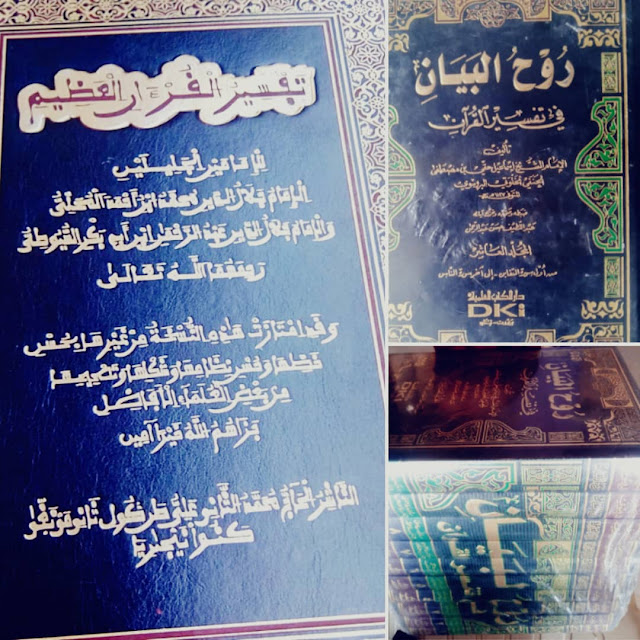
58. Tafsīr al-Jalālayni [by Jalāludeen al-Mahālī & Jalāludeen as-Suyūtī]
59. Tafsīr Ibn ‘Abbās (Tanwīr al-Miqbās) [by Abī Tāhir ibn Ya’aqūb Fairūzābādī]
60. Shams al-Ma’arif al-Kubrā wa Latā’if al-‘Awārif [by Imām Ahmad ibn ‘Aliyyu Al-Būnī]
61. Al-‘Ishrīniyya (Dīwān al-Wasā’il al-Mutaqabala fī mad’hi-n Nabiyyi) [by Wazīr Abdur-Rahmān al-Fāzāzī & Imām AbūBakr al-Muhīb]
62. Mukāshafat al-Qulūb [by Imām Abū-Hamīd al-Ghazzālī]
63. Ghāyatul Amānī fī Sīrat Sīdī Ahmad At-Tijānī [Compiled by Muhammad ibn Al-Hassan al-Mada’ū Thānī]
64. Ifādatul Ahmadiyyah: Li-Mureed As-Sa’ādat al-Abadiyyah [by Sīdī Muhammad At-Tayyib As-Sufyānī]
65. Majmu’ Qasā’id al-Mawlid an-Nabawī (by Shaikh Ibrahim Niasse)
66. al-Irshādāt al-Rabbāniyyah bi al-Futūḥāt al-Ilāhiyyah li-Sīdī Abī-l ‘Abbās Ahmad al-Tijānī ‘alā Matn al-Hamziyyah li-Abī ‘Abdullah al-Būsayrī (The Lordly Guidance by way of Divine
Illumination of Sīdī Abī-l ‘Abbās Ahmad al-Tijānī: Commentary to Text of Hamziyyah by Abu
Abdullah al-Busayri) [Published by Sīdī ‘Alī Ḥarāzim Barrādah] – Arabic
67. Sirrul Asraar (by Shaikh
AbdulQadir Jaylani)
68. Abu Ma’shar al Falaki (by
Shaikh Abu Hayyillahi al-Marzuqi)
69. Ismu-llahi al-a’azam (by
Shaikh AbdulFatai Tūkhī)
70. Tansheet as Sufiyya fi’l
Ahzaab al-Qaadiriyya (Shaikh Nasiru Kabara & Alfa Nda Salati)
71. Urjuzat Ruh ul Adab
(Shaikh Ibrahim Niasse)
72. Al-Burdat
al-madeehi(Shaikh Būsayri)
73. Tafsīr al-Qur'ān al-'Azīm "lil-Imāmayn Al-Jalālayni" - Warsh & Hafs - 2 Vols (Arabic)
74. Mukhtārāt min Mu'alafāt al-Fudiyāwiyūn [Selected Writings of the Fodios (Shaykh Usman, Abdullah &
Muhammad Bello)] - 11 Vols (Arabic)
75. Natā'ij al-Asfār fī-s Salāt 'alā-n Nabiyy al-Mukhtār (by Shaykh Ahmad Abū-l Fat'h al-Yarwāwī)
76.Teebul Fā'ihi Wal Wirdu-s Sā'ihi fī Salātul Fātih (by Shaykh Muhammad ibn 'Abdul Wāhid an-Nazeefī)
77. Tafsīr al-Qur'ān al-'Azīm "lil-Imāmayn Al-Jalālayni" (by Imām Jalālu-Deen Al-Muhalī & Imām Jalālu-Deen As-Suyūtī) [Warsh & Hafs Scripts - 2 Vols]
78. Rūh ul-Bayān fī Tafsīr ul-Qur'ān (10 Volumes Sūfī Tafsīr/Quranic Exegesis) [by Shaikh Ismā'īl al-Haqqī al-Barūsī]
For enquiries & order,
visit our WhatsApp Catalogue👇🏼👇🏼👇🏼
wa.me/2349078376281
WhatsApp: +2349078376281
Call: +2348074393996
Email: smilebak2004@gmail.com OR smilebakglobalemporium@gmail.com
Facebook: @SmilebakGlobalEmporium
@PristineSufism
Instagram:
@SmilebakGlobalEmporium
@PristineSufismBooks
SUFI LITANIES & SALAT ALA NABIYY (PRAYER UPON PROPHET) COLLECTION

• Ahzāb wa Awrād (Collection of Prayers/Liturgies and Litanies) of Shaykh Ahmad at-Tijani
• Kanzul Masūn [Guarded Treasure] - Collections of Prayers/Supplications (by Shaykh Ibrahim Niasse)
• Jihāzu Sārih wa Sā’ihi wa Sābih wal ‘Ākiful Fālihu fī Tawajuhāt bi-Salātul Fātih (by Shaykh Muhammad Gibrima)
• Natā'ij al-Asfār fī-s Salāt 'alā-n Nabiyy al-Mukhtār (by Shaykh Ahmad Abū-l Fat'h al-Yarwāwī)
• Teebul Fā'ihi Wal Wirdu-s Sā'ihi fī Salātul Fātih (by Shaykh Muhammad ibn 'Abdul Wāhid an-Nazeefī)
[WhatsApp +2349078376281 or click http://wa.me/2349078376281]


